In the manufacturing sector, the consensus is that "quality is produced, not inspected." However, this does not mean that the inspection process can be weakened. On the contrary, inspection during the production process (i.e., inter-process inspection) is considered the core link connecting raw material input and finished product output, and its importance to quality control even surpasses that of final shipment inspection. In recent years, with the widespread adoption of lean manufacturing, Six Sigma, and Industry 4.0 concepts, process inspection is shifting from "passive control" to "proactive prevention," becoming a key means for enterprises to reduce costs, increase efficiency, and mitigate quality risks.
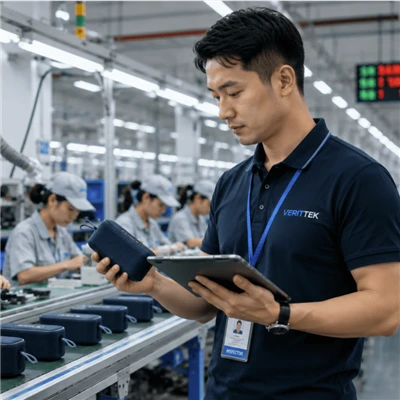
Inspection during the production process refers to the real-time inspection of semi-finished products, work-in-process, or key process parameters between or within different stages of product manufacturing-such as stamping, injection molding, assembly, welding, and surface treatment. Common forms include: first-piece inspection, autonomous inspection (operator self-inspection), patrol inspection (quality inspector patrol inspection), and online automated detection. Its core purpose is not to screen for defective products, but to detect variations as early as possible and prevent the generation of defects in batches.
"Many quality managers make the mistake of focusing resources on pre-shipment inspection while neglecting process control," points out a quality expert in the automotive industry with 20 years of experience. "In fact, by the time a product reaches the final inspection stage, defects have already formed. Removing defective products at this point not only wastes materials, labor, and logistics costs, but may even delay delivery due to rework. The significance of process inspection is to provide timely warnings when defects first appear."
For example, in the electronics manufacturing industry, a company producing smartphone circuit boards (PCBs) once failed to install automated optical inspection (AOI) after the reflow soldering process. This resulted in a batch of poorly soldered PCBs being discovered only during functional testing, ultimately causing rework losses of over one million yuan. After introducing process inspection, the company directly embedded AOI equipment into the production line. Each board is inspected within 30 seconds of soldering, reducing the defect rate from 1.2% to 0.15%, and enabling real-time data feedback and parameter adjustments.
In broader manufacturing scenarios, the importance of process inspection is reflected in the following dimensions:
1. Reducing Quality Costs: Quality costs include prevention costs, appraisal costs, internal failure costs, and external failure costs. Process inspection can significantly reduce internal failures (scrap, rework) and external failures (returns, claims, brand damage). Studies show that the cost of finding a defect in a process is about one-tenth of that of finished product inspection and only one-hundredth of the cost of handling customer complaints.
2. Achieving Rapid Feedback and Closed-Loop Improvement: When process inspection detects anomalies, the production line can be immediately stopped or parameters adjusted, tracing back to specific human, machine, material, method, and environmental factors. For example, an injection molding factory implemented automatic weighing inspection after each mold cycle. Upon detecting excessive weight fluctuations, it located the raw material drying temperature setting deviation within 30 minutes, preventing eight consecutive hours of non-conforming product production.
3. Meeting Stringent Industry Regulations and Customer Requirements: In high-risk industries such as aerospace, medical devices, and automotive manufacturing, process inspection is a mandatory requirement. For example, ISO 13485, the quality management system for medical devices, explicitly requires "inspection and testing at appropriate stages of production"; IATF 16949, the automotive industry standard, emphasizes the application of process capability index (Cpk) and control charts, requiring all critical characteristics to be subject to statistical process control (SPC) through process inspection.
4. Empowering Frontline Employees and Promoting an Autonomous Quality Culture Modern process inspection is no longer solely the responsibility of quality inspectors. Many companies are implementing a "self-inspection + mutual inspection" model, where operators conduct first-piece inspections at the start of production or each batch and regularly sample products from their own process. This not only allows for the immediate detection of problems but also enhances employees' sense of responsibility and quality awareness. A hardware tool company in Zhejiang implemented a "red box system"-operators can place products with defects into a red box and trigger a problem record-resulting in a 40% reduction in process defect rate within three months.
5. Laying the Foundation for Smart Manufacturing and Digital Factories Within the Industry 4.0 framework, process inspection is deeply integrating with the Internet of Things, big data, and artificial intelligence. Online sensors collect parameters such as temperature, pressure, and vibration in real time; machine vision systems automatically identify surface defects; and SPC software dynamically generates control charts and issues early warnings. This real-time data is not only used for current batch control but can also be trained into predictive models to anticipate quality drift trends hours in advance.
Successful implementation of process inspection also faces challenges: excessive inspection may reduce production efficiency, improperly set inspection points may create bottlenecks, and ineffective use of inspection data renders it merely a formality. Experts recommend that companies identify critical control points based on Failure Mode and Effects Analysis (FMEA), reasonably balance sampling frequency and inspection intensity, and incorporate inspection results into management review and continuous improvement cycles.