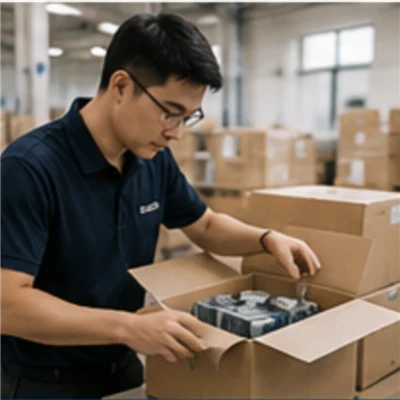
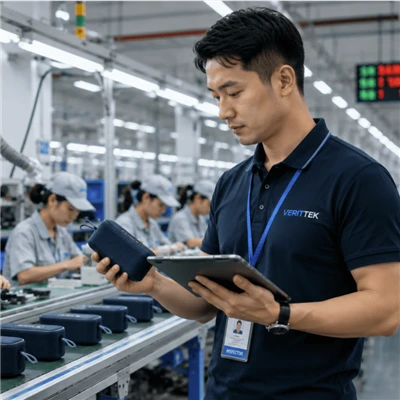
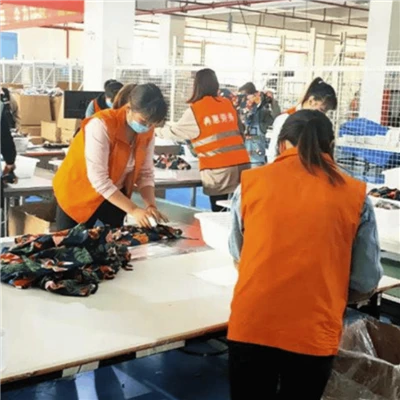
In the context of increasingly fierce global competition in manufacturing, product quality has become a core element for companies to win market trust and long-term orders. The final crucial link between the production line and the customer-pre-shipment inspection-is receiving increasing attention from manufacturers, traders, and international buyers. Production inspection, especially pre-shipment quality checks, is not only about confirming the final state of the product but also a comprehensive verification of the ability to control the entire production process.
Pre-shipment inspection typically refers to a systematic inspection conducted by professional quality inspectors or a third-party organization, according to the contract, technical specifications, and sample standards, of the product's appearance, dimensions, function, performance, packaging method, and labeling, before the product completes all production processes and is packaged for shipment. Its goal is to ensure that every batch of products to be shipped meets customer requirements and prevents substandard products from entering the market.
"Many quality issues actually surface after shipment, such as damage during transport, incorrect labeling, and intermittent functional failures," pointed out a quality manager at an international inspection and certification agency. "Through rigorous production inspection, companies can identify and correct problems before products leave the factory, avoiding returns, claims, and even customer loss."
For example, in the consumer electronics industry, a Shenzhen factory that manufactures wireless headphones for overseas brands once suffered a batch of defective products with battery life issues entering the European market due to a lack of pre-shipment inspection, ultimately leading to large-scale returns and losses exceeding 2 million yuan. Subsequently, the factory introduced a lot-quality inspection (LQI) process, including functional sampling, drop testing, and packaging integrity checks, resulting in an 85% decrease in customer complaints within three months.
In the automotive parts, medical device, toy, and daily consumer goods sectors, pre-shipment inspection is even more mandatory or a high-risk control point. For instance, a child safety seat manufacturer in Jiangsu Province conducted 100% unpacking inspections according to ECE R44 regulations before exporting, maintaining video records, successfully passing the annual audit of a German client and obtaining priority supplier status.
From a methodological perspective, modern production inspection has evolved from traditional manual visual inspection and caliper measurement to automated testing equipment (such as CCD optical sorting machines), online testing systems (ICT/FCT), and data traceability platforms. Some leading companies have also introduced statistical sampling standards (such as ANSI/ASQ Z1.4) and zero-defect schemes (C=0 sampling plans) to minimize the risk of missed defects while ensuring inspection efficiency.
However, industry experts also caution that production inspection cannot replace process quality control. If the manufacturing process itself is unstable, relying solely on pre-shipment "plugging leaks" is not only costly but also insufficient to cover all potential defects. The ideal model is: process control as the primary approach, supplemented by outgoing inspection-that is, maintaining production stability through first-piece confirmation, patrol inspection, and last-piece inspection, with rigorous pre-shipment inspection as the final line of defense.
For purchasing parties, engaging third-party agencies to conduct unannounced pre-shipment inspections is also an effective strategy to reduce supply chain risks. The United Nations Trade Promotion Organization (UN/CEFACT) recommends that inspections be conducted after the product has been 100% manufactured and packaged, but before it has been loaded into containers, to ensure representative sampling and the possibility of corrective action.